The floor
Four hundred students a semester walk in with a drawing and walk out with a part — if the design survives the machine. I’m the person between the two: I check whether a design can be made, train the cut, catch the setup that will fail, and make the call on what is ready to run.
Three semesters on the floor, across the lathe, mill, bandsaw, laser, sheet-metal brake, and weld bench — helping ME students make parts for Fluids lab, Heat Transfer lab, and Sophomore and Senior Design.
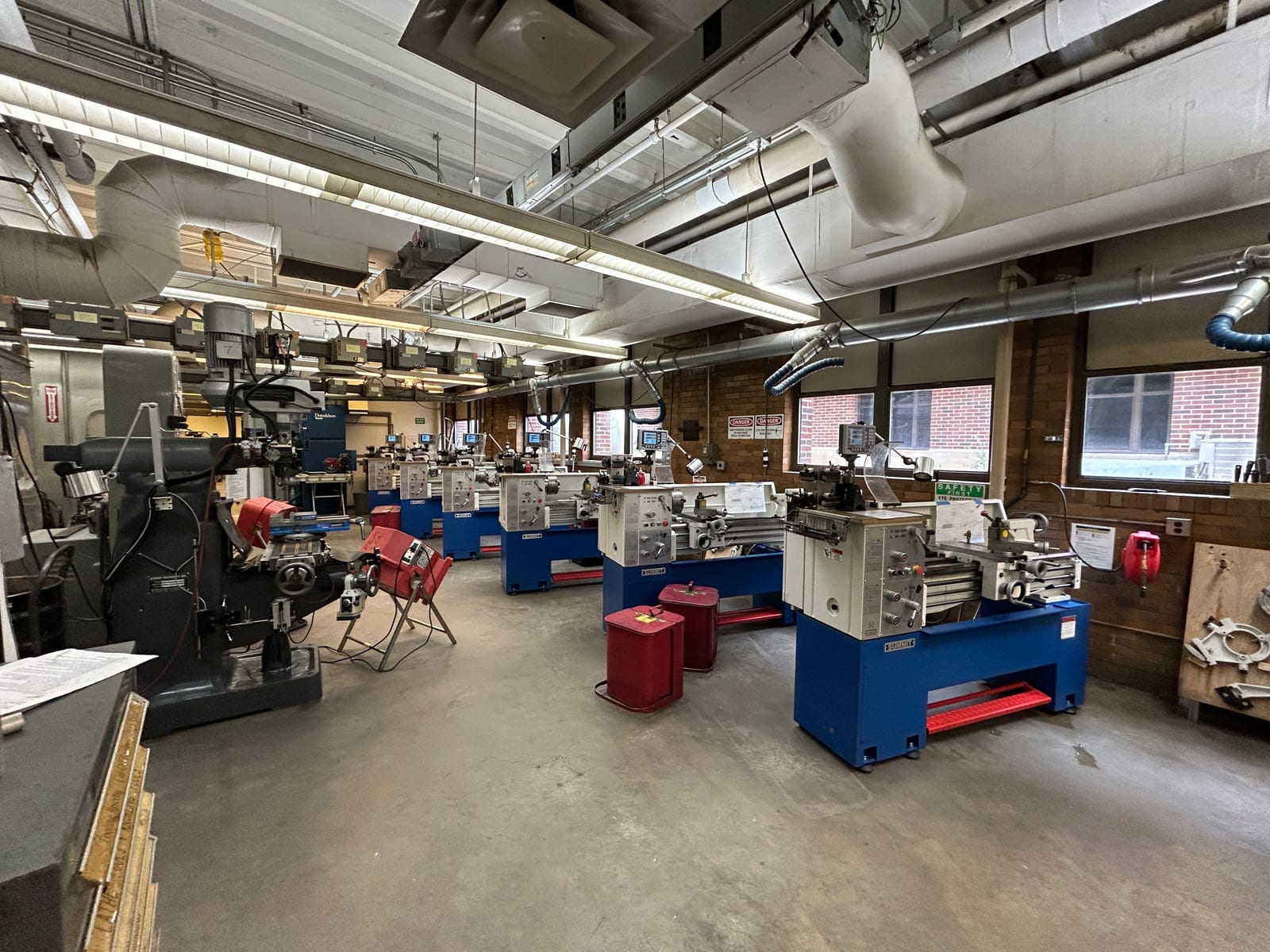
The gate
Before a part reaches a machine, I check four things: a real engineering drawing; a feature and tolerance set the shop can actually hold; a material that will behave under the cut; and a passed safety quiz with PPE in hand. Most designs clear it. A few don’t — and catching those early is the whole point.
The gate is not there to say no. Apart from the real outliers, the job is to make almost everything makeable.
What I sent back, and why:
Copper, thermocouple holes. Tiny holes drilled into a copper block. Copper heats and moves as you drill, so the hole distorts and the bit snaps. I had already watched a near-identical job break a bit off inside the hole, so this one was a hard stop — change the material rather than fight the copper.
Half-inch steel sheet. A bend past what the brake could do. Caught at the drawing, not at the machine.
The Curta. A Curta calculator at 0.01 mm tolerances, wrong material, and no machine in the building that could hold it. The rare design that does not belong in a student shop.
Judgment also includes stopping a running machine. A part once came loose on the mill mid-cut; I hit the e-stop before it became shrapnel. The daily habits are quieter: a sacrificial push block on the saw, stock squared and seated before the cut, excess material left on, no unsupported overhang, RPM matched to tool and material.
Other people’s parts
Most days were other people’s parts — robotic grippers, SAE car components, a self-balancing snowboard. The contribution was rarely running the machine. It was changing how the part got made so it could be made at all.
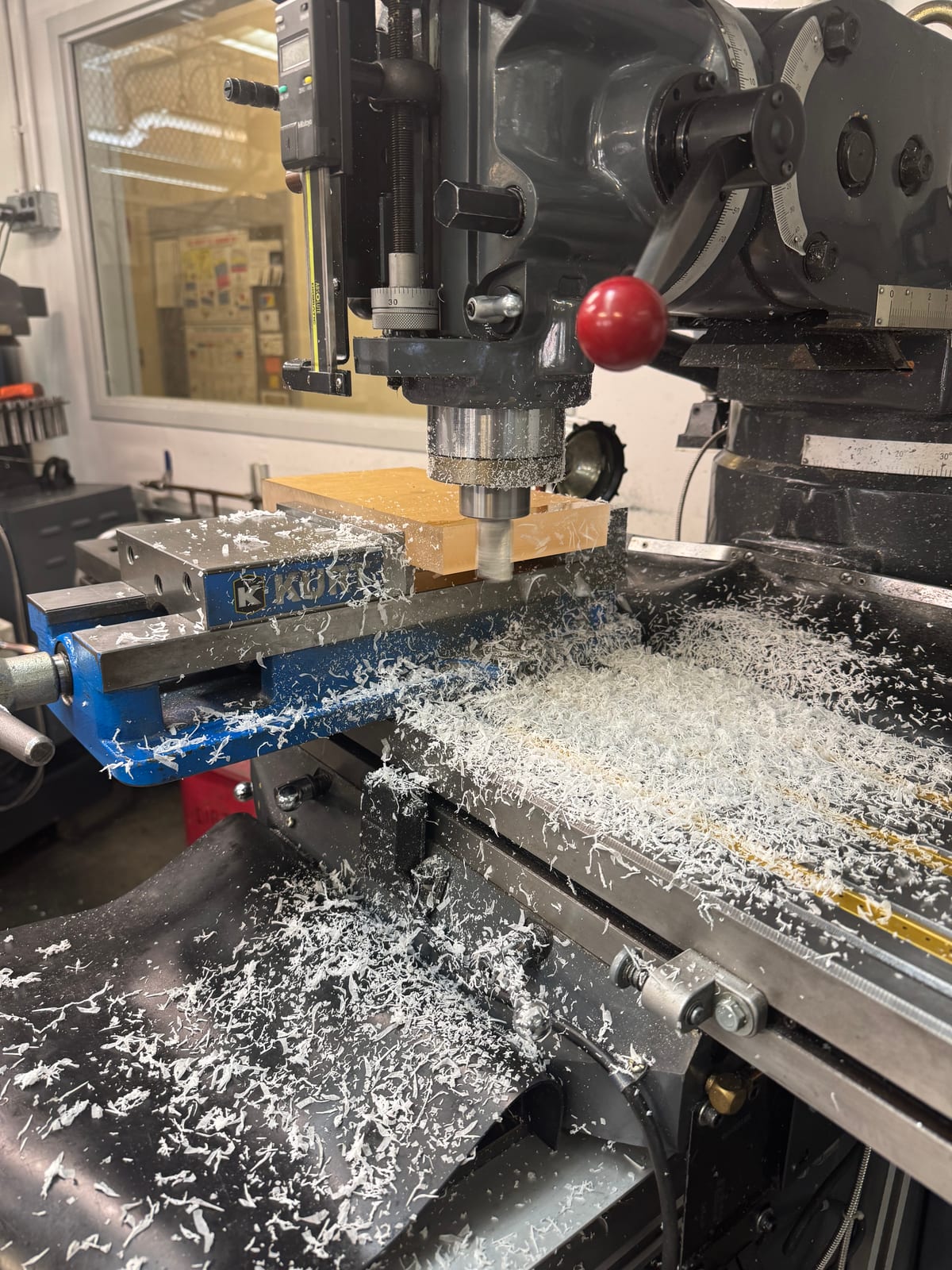
The cleanest example: a senior design team needed a custom attachment to seat in a narrow 8020 slot. Their plan drilled each hole at a set distance from the last one, so every hole inherited the previous hole’s error. I squared the stock with a fly cutter to set one clean datum, then dimensioned every feature from that single reference instead of hole to hole. The stack-up went away and the part fit the slot.
Relational dimensions chain error down the part. Absolute dimensions off one datum do not. For a tight slot, that is the difference between fits and does not.
The hammer — the teaching part
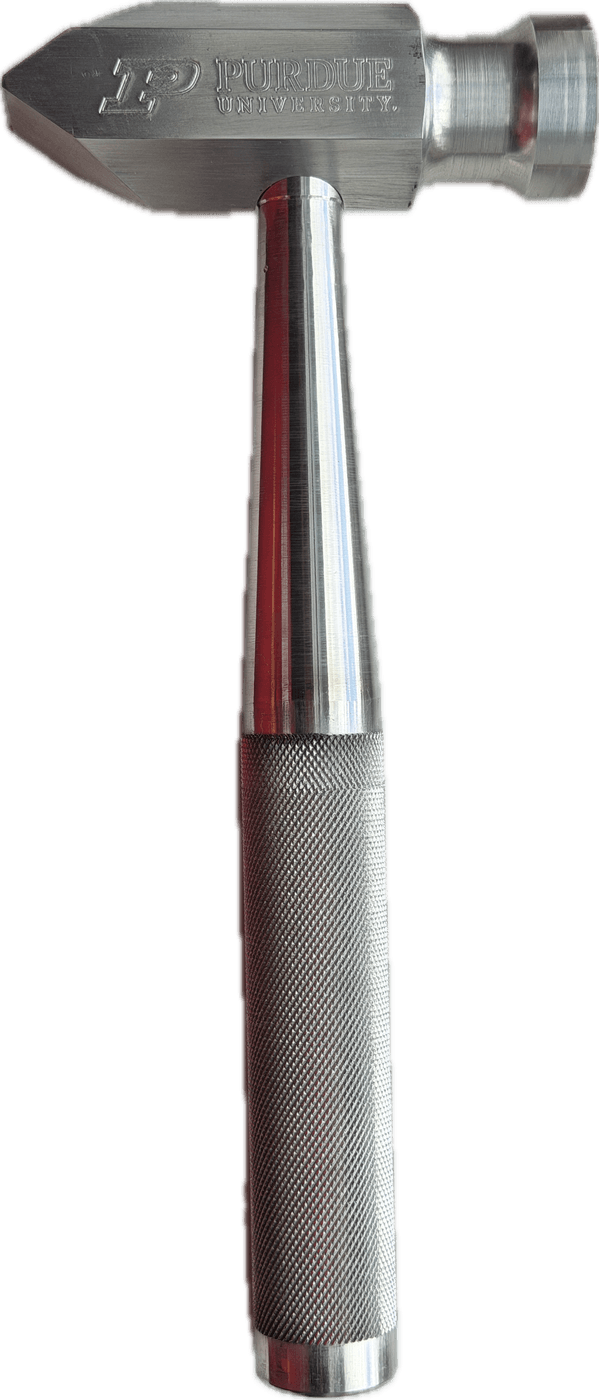
The hammer is the shop’s teaching part: two drawings, the head and the handle, and a bar of 6061 aluminium. I machine it to the print while a sophomore runs the lathe and mill for the first time — handle in 45 minutes, head in 35, tolerances held the whole way.
The hard feature is the section between the threaded end and the shoulder above the taper, and the taper itself, cut with the taper attachment. With a beginner on the handles, I make the call on when to hold a number and when to adjust within tolerance so the finished hammer reads as one cohesive part.
My own bench
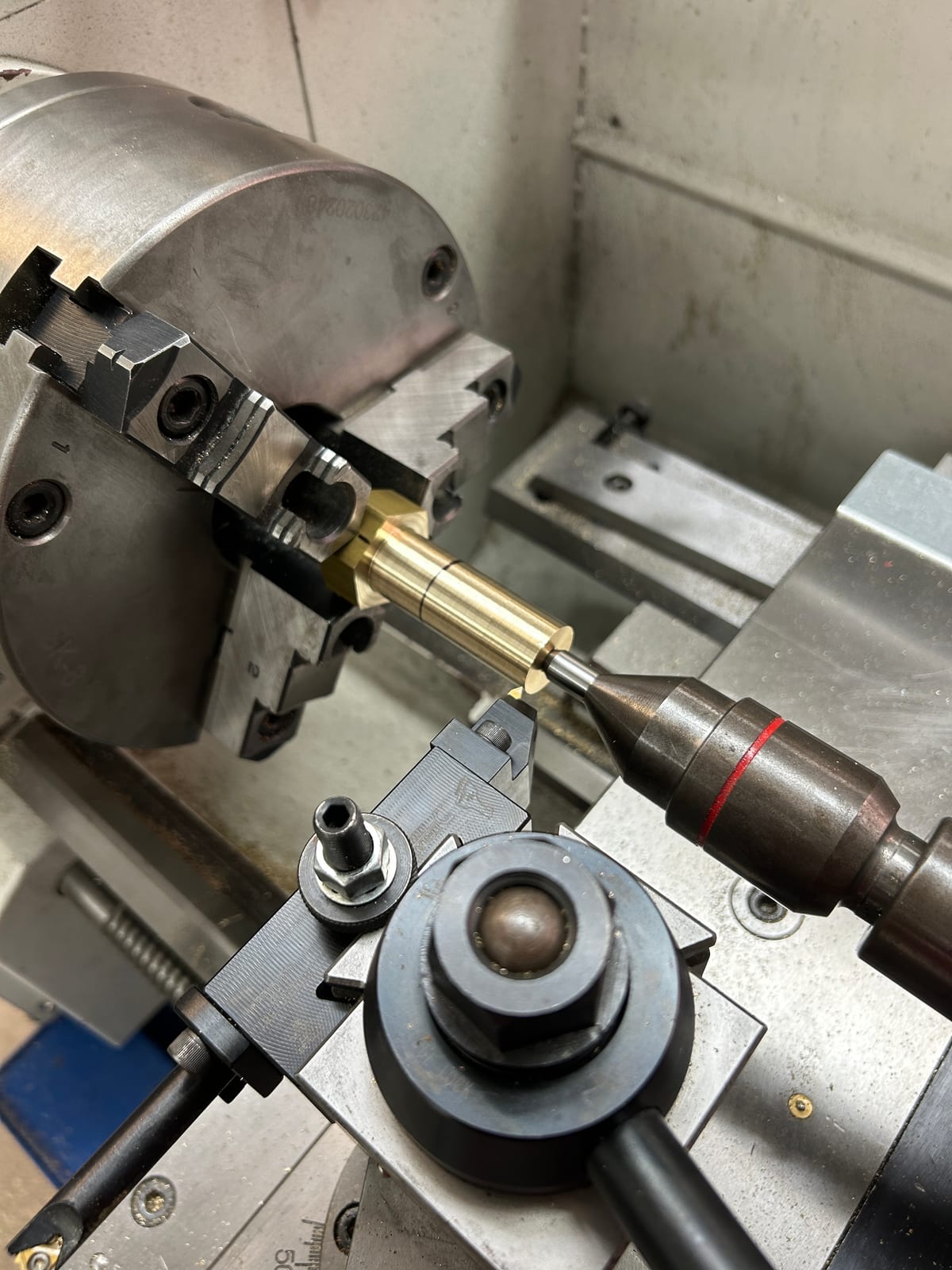
Brass nut and bolt. A single piece of hexagonal brass became a nut, a bolt, and a washer. The hard part was the sequence: every time the part left the chuck or moved between live centers, the center shifted, so the order of operations had to protect the reference for the cuts that came later. I single-point threaded both the male and female threads to fit each other, with no do-over if a pass ran deep. Single stock, single fit — plan the order so you never lose the datum you need later.
Scribe. Turned taper for grip, knurled body, point ground by hand. Aluminium, so a soft-tip scribe — a form exercise more than a working tool.
Machinist vice, partial. Base finished, then out of stock and out of time waiting on parts. Left honest as partial.
Sheet metal. Bends, seams, and spot welds across a toolbox and smaller pieces. The brake pressed unevenly toward one edge, so the bend allowance had to account for it; misplaced bends came out angular and needed correcting, and spot welds occasionally blew through the sheet.